Effects of Corrosion on Lighting

Signs & Preventions

What is corrosion?

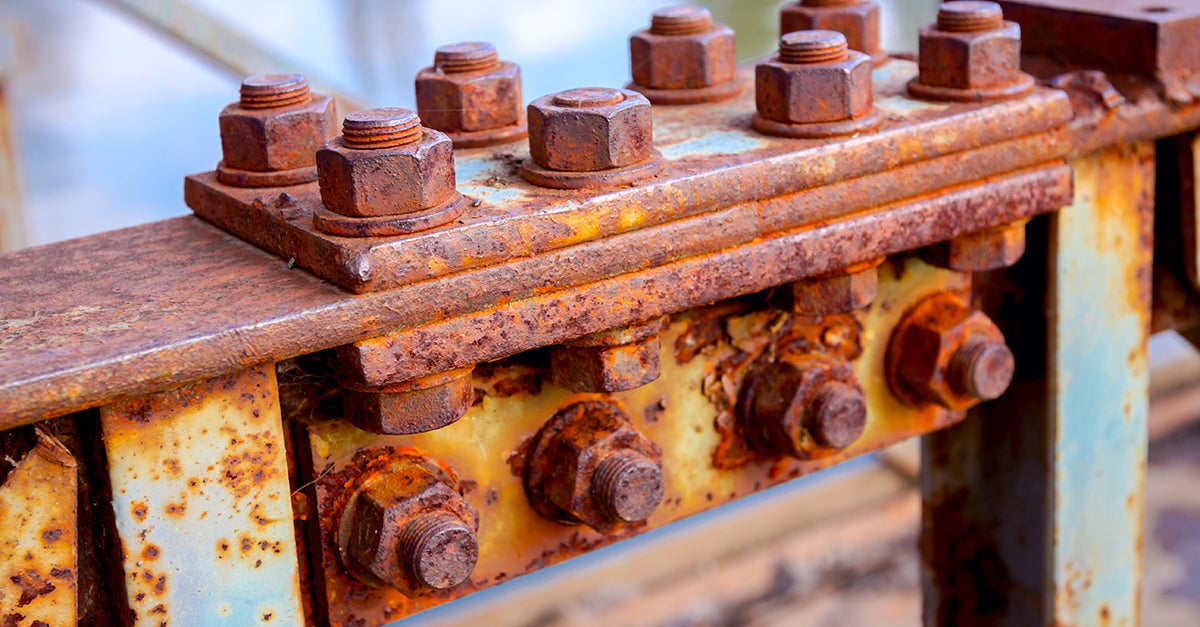
Corrosion occurs when materials like certain metals (aluminium, steel, copper, brass) breakdown due to a chemical reaction to the environment. This can weaken the structural integrity of metal products overtime, and potentially weakens its use, making it hazardous and costly long-term if left untreated.

What are the signs?

Corrosion can take form in numerous ways with different metals reacting differently to the environment.

The most common signs are: 

  • Rust - A coating or cluster on iron and iron-based alloys (e.g. steel) that range from a bright orange to a reddish brown. It can be brittle and easily crumble through long-exposure.
     
  • Patina - A thin, distinct colour produced on the surface of certain metals after long exposure to the air. Usually alters the colour of the material. For example: Copper usually goes to a blue-green colour and Bronze goes to deep brown and green colours.
     
  • Tea Staining - A spattered brown or yellow discoloration that appears on stainless steel surfaces.
     
  • Pitting - A localised form of corrosion that can occur in small specific areas of a product or spread extensively. Creates holes.
     
  • Crevice - Appears in confined or narrow spaces where moisture and grime are trapped such as under bolts or where clamp hardware are used. Presents as a rust of dark brown stain.

How to Prevent Corrosion?

  • Select products that are resistant to corrosion  - Use metals like stainless steel, aluminium, copper and brass.
     
  • Apply protective coating - Powder coating is highly effective against corrosion as it creates an impermeable barrier between metal and natural elements.
     
  • Pick appropriate IP rating - Choose lightings with high IP rating such as IP67 or IP68 to provide strong protection against moisture and dust which in turn, can reduce risk to corrosion
    .
  • Seal components and crevices -  Sealing components or areas prone to corrosion can prevent accumulation to air and ensure natural elements don't interact with lighting finishes.
     
  • Plan for maintenance -  Have routine inspections for rust or surface damage, clean lightings and if needed, replace worn out or corroded parts. 
Title

Regular Maintenance Matters! 

Outdoor and Indoor lights should be inspected periodically, especially during rapid changes in weather conditions such as heavy rain, high humidity levels or high wind levels . If corrosion is present, clean and reapply protective coating to strengthen the lighting against ongoing or future corrosions. Keeping lights clean, well-sealed, and properly coated will maintain their performance and longevity. With the right care, coast suitable lighting will remain strong, bright and safe against forms of corrosion.

Coastal Suitable Lighting

All Blogs